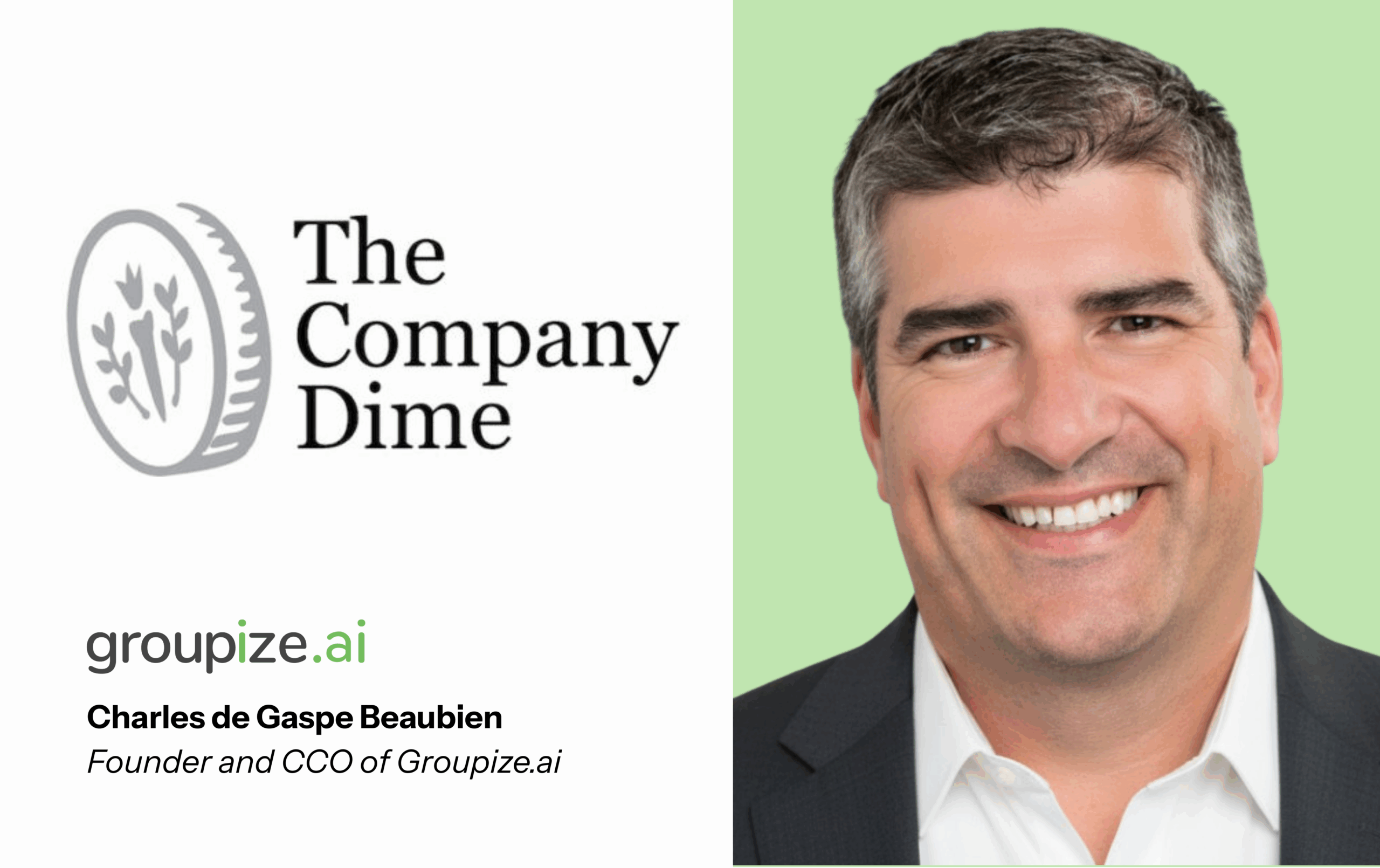
AI has the potential to streamline the manual, fragmented processes of meetings and events management, according to Groupize.ai founder and chief commercial officer Charles de Gaspe Beaubien. Injecting automation and new intelligence will enable planners to focus on strategy and people while the robots handle logistics, compliance and data.
Artificial intelligence has transformed banking, healthcare, manufacturing and retail. Banks now detect fraud in milliseconds. Hospitals accelerate diagnoses and tailor treatments. Manufacturers predict supply-chain disruptions before they occur. Retailers anticipate demand before customers even search.
Now, after years of lagging behind, the meetings and events sector has reached its own inflection point.
In October, at both IMEX America 2025 in Las Vegas and the Business Travel Show America in New York, the message was clear: AI is no longer a futuristic or trendy concept. It is reshaping how meetings are sourced, planned, executed and measured, and exposing how outdated many legacy tools have become.
The events also showcased that not all AI is created equal. The most talked-about tools are often the more flashy ones, but the real value lies in solving complex, everyday problems. In meetings and events, that means automating the manual, error-prone work that drains time and resources, including reconciling budgets, ensuring compliance, sourcing venues and managing data.
This is where AI delivers meaningful impact by reducing friction, improving accuracy and giving planners back the time to focus on strategy and results.
The Numbers Tell A Clear Story
Research by Soundings, a staffing and recruitment consultancy, underscores how quickly this shift is accelerating. More than 60 percent of 200 meeting and event planners polled between February and April said they were using AI for content creation, and 75 percent indicated they are likely to adopt AI tools and technologies in the next 12 months.

According to an American Express Global Business Travel 2026 forecast, 35 percent of 601 meeting professionals surveyed in July 2025 said they expected to use AI for event communications. The same number expected to use AI for attendee-sponsor matchmaking and nearly as many said the same about creative theme development.
Together, these findings reveal an industry moving beyond experimentation. AI is becoming an operational necessity.
Still, few true AI innovators were present at IMEX. Many attendees discussed “chat” as a novelty prompt tool for summarizing notes or writing copy. What most missed is that the same underlying technology can already manage full workflows — analyzing briefs, sourcing venues, tracking compliance and reconciling budgets. What looked like a novelty two years ago is now capable of doing the work entire teams once handled manually.
From Simple Tools To Intelligent Agent Ecosystems
The perception gap between what AI is and what it’s becoming is widening fast. Early adopters used chatbots and automation for convenience; what’s emerging now is ecosystems of specialized agents that collaborate, learn and act autonomously across the entire event lifecycle. Traditional AI waits for prompts. Agentic AI anticipates needs and executes tasks independently.
Imagine an ecosystem of connected agents:
- One reads an event brief and instantly builds a venue shortlist with live benchmarks.
- Another drafts RFPs, tracks responses and manages contracts.
- Another validates attendee credentials and ensures real-time compliance.
- Another builds registration sites and personalized event apps.
- Another reconciles budgets, flags risks and forecasts savings.
- Another captures attendee engagement data and links it directly to CRM and sales systems.
What once required coordination among multiple systems can now be orchestrated seamlessly by agents that never forget, fatigue or miss a deadline. The result is faster execution and intelligence at scale. Every decision, dataset and process becomes connected and contextual, and continuously improves.
What ‘AI-First’ Really Means
It’s easy to say you “use AI.” It’s much harder to be AI-first.
For most tech companies, AI began as an add-on. But for the next generation of innovators, AI will become the foundation rather than an enhancement. Every product, process and customer interaction assumes intelligence is built in.
Here’s what AI-first means.
- Product: Roadmaps focus on what AI can learn, automate or optimize, measured by time saved and insights generated.
- Design: Interfaces become conversations that are natural, predictive and transparent.
- Engineering: Data pipelines and models are treated as core infrastructure; AI assists both users and developers.
- Quality: Testing is continuous and predictive, with AI bots simulating real-world use and feeding insights back into the system.
Being AI-first goes beyond the technical; it’s also cultural. Teams move from feature-driven to intelligence-driven development, asking one consistent question: How can AI help here? Cross-functional “AI squads” spanning product, design and engineering build shared intelligence capabilities on unified data foundations, ensuring every release makes the platform and the company smarter.
This shift marks a turning point. AI-first organizations are reshaping how meetings and events will be planned, measured and experienced in the future.
Imagine an ecosystem of connected agents:
- One reads an event brief and instantly builds a venue shortlist with live benchmarks.
- Another drafts RFPs, tracks responses and manages contracts.
- Another validates attendee credentials and ensures real-time compliance.
- Another builds registration sites and personalized event apps.
- Another reconciles budgets, flags risks and forecasts savings.
- Another captures attendee engagement data and links it directly to CRM and sales systems.
What once required coordination among multiple systems can now be orchestrated seamlessly by agents that never forget, fatigue or miss a deadline. The result is faster execution and intelligence at scale. Every decision, dataset and process becomes connected and contextual, and continuously improves.
Why This Feels Different
The industry has seen many technology waves, from virtual event platforms to sustainability dashboards to data analytics tools. But AI feels different because it redesigns how the work gets done.
Take compliance. In regulated industries like life sciences, to avoid costly fines, the biggest challenge for planners is navigating corporate policies, country- and state-specific rules, and global transparency requirements like the Open Payments Act. Traditional software catches errors after the fact. AI validates every attendee and transaction as it happens, automatically flagging discrepancies and generating documentation. It shifts compliance from a reactive burden to a proactive safeguard — embedded, not enforced.
The Data Problem AI Finally Solves
Meetings and events generate massive data trails: registrations, travel, sessions, feedback, expenses and follow-ups. Historically, this data lived in silos — valuable but disconnected. You could report on it, but not learn from it.
AI changes that by connecting disparate data sources and revealing patterns no human could detect:
- Which venues deliver the best cost-to-satisfaction ratio?
- Which cities yield the highest ROI when factoring in travel and conversion rates?
- Which session formats consistently drive engagement?
For the first time, this data predicts what will work next time.
What Humans Still Do Better
The most revealing conversations at IMEX weren’t about what AI can do, but what it shouldn’t replace.
In a world where algorithms can mimic creativity and conversation, face-to-face interaction has become the ultimate proof of authenticity. Human connection, trust, empathy and collaboration are the currency AI cannot recreate.
Technology now manages logistics, sourcing, compliance and measurement. That allows planners to focus on designing experiences that foster relationships and ideas — the human work that creates lasting value.
The Future Of Meetings Is AI-Driven
AI won’t transform every organization overnight, but the trajectory is unmistakable. Systems built on rigid processes are giving way to platforms that learn, adapt and improve in real time.
- Automation: Routine planning, sourcing, contracting and communications will be handled by autonomous agents.
- Productivity: Smaller teams will achieve more as AI manages logistics, compliance and personalization.
- Human focus: Professionals will spend less time coordinating and more time designing meaningful experiences.
- New value chains: Connected ecosystems will allow AI agents to negotiate, book and optimize events end to end.
The winners will be those who act early and work with the organizations that rebuild their operations on AI-first architectures rather than bolting on features later.
The future of meetings is about elevating planners to perform at their best, with AI handling everything else. The future won’t wait. And neither will AI.