Coming out of GBTA, one thing is clear: there is tremendous innovation happening across meetings and events.
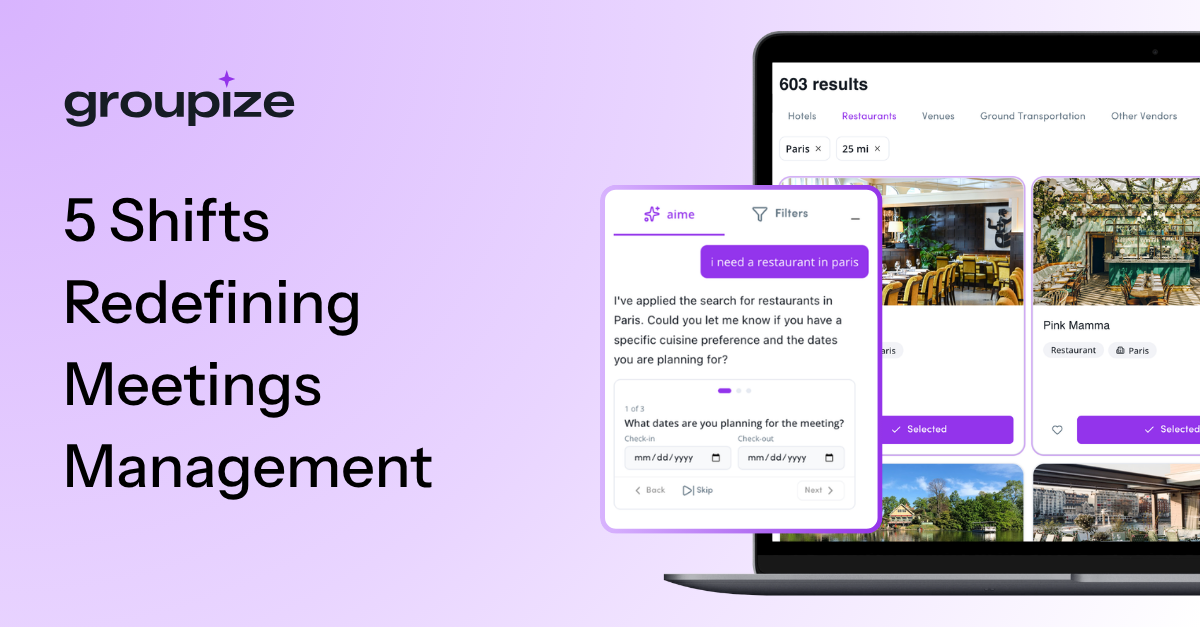
AI is changing how we search for hotels and venues. New platforms are making it easier to compare properties, send RFPs, negotiate rates and book space. That innovation is good for our industry.
But as new solutions enter the market, we need to be careful not to confuse venue sourcing with meetings management.
They are not the same thing.
Venue sourcing starts the workflow. Meetings management manages the entire journey.
A meeting begins long before attendees arrive at a hotel — and the work certainly doesn’t end when a contract is signed.
True meetings management connects what happens before, during and after the meeting.
Before the meeting, organizations need to manage approvals, budgets, policy, venue and hotel sourcing, contracting, attendee registration, air travel, ground transportation, room blocks and communications.
During the meeting, teams are managing attendees, changes, logistics, onsite experiences, suppliers, spend and often complex compliance requirements.
After the meeting, there is still critical work to be done: reconciliation, final invoices, expense integration, reporting, unused room inventory, budget-to-actual analysis, compliance documentation and capturing the data needed to make the next meeting better.
Venue sourcing is an important part of that lifecycle.
But it is one part.
This distinction matters because corporations don’t simply need a better way to find hotels. They need a better way to manage meetings as a category of enterprise spend and activity.
Travel managers don’t stop managing a business trip once the traveler selects a hotel. Finance doesn’t stop caring about an expense once a purchase is made. And meeting programs shouldn’t lose visibility once a venue has been sourced.
The opportunity for our industry is to connect the entire meeting lifecycle.
That means connecting meeting policy with approvals. Budgets with actual spend. Attendees with air and hotel. Registration with travel. Meetings with expense. Planning with onsite execution. And ultimately, every transaction with reconciliation and reporting.
And this is where AI becomes particularly interesting.
Finding a venue faster is useful.
But imagine AI that understands the entire meeting — the company’s policies, budget, attendees, preferred suppliers, negotiated rates, travel requirements, historical meeting data and desired outcomes — and can help orchestrate the workflow from initial request through final reconciliation.
That’s not AI-powered venue sourcing. That’s AI-powered meetings management.
As an industry, we should absolutely celebrate the explosion of innovation happening around venue discovery and sourcing.
But we shouldn’t mistake the beginning of the workflow for the whole workflow.
The future of meetings management isn’t just about finding the right place to meet.
It’s about intelligently managing everything that happens before, during and after people come together.